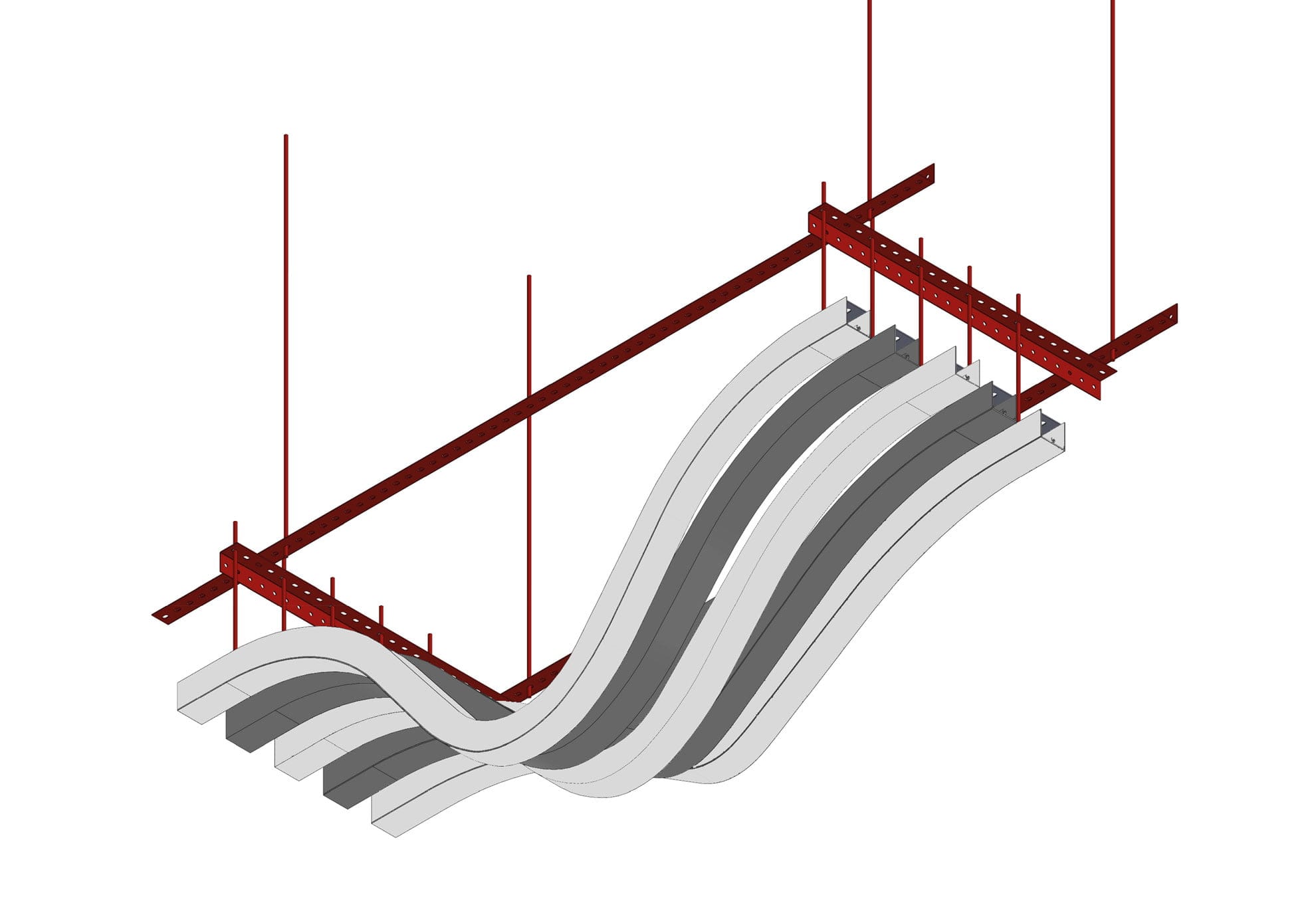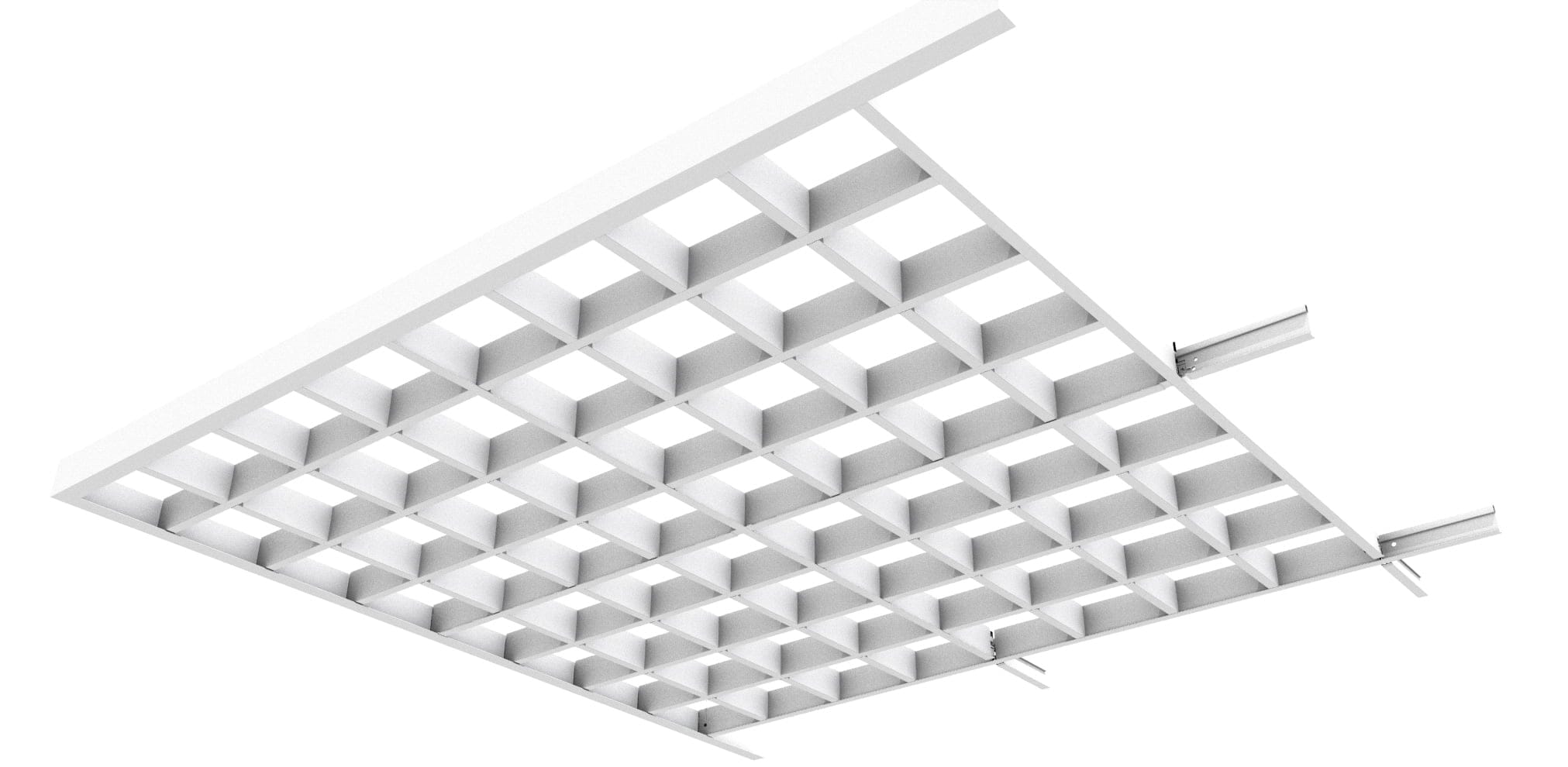
Lay-in suspended ceilings are modular ceiling solutions in which panels — usually metal or mineral fibre — are set into a pre-installed carrier grid. They are particularly preferred in interiors such as offices, commercial buildings, hospitals, schools and shopping centres.
Technical data
- Materials
- Metal (aluminium/steel), mineral fibre, plasterboard or PVC
- Panel sizes
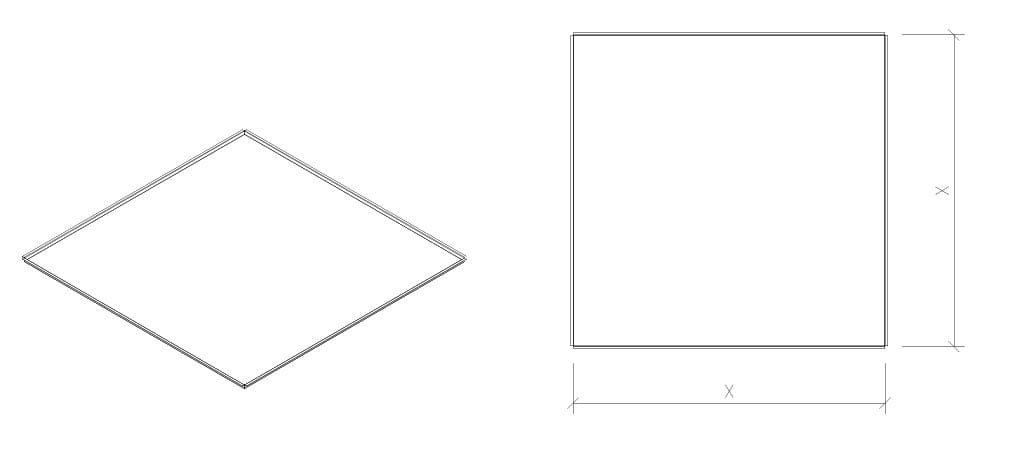
- 600×600 mm or 600×1200 mm
- Surface finishes
- Flat, perforated, patterned or painted
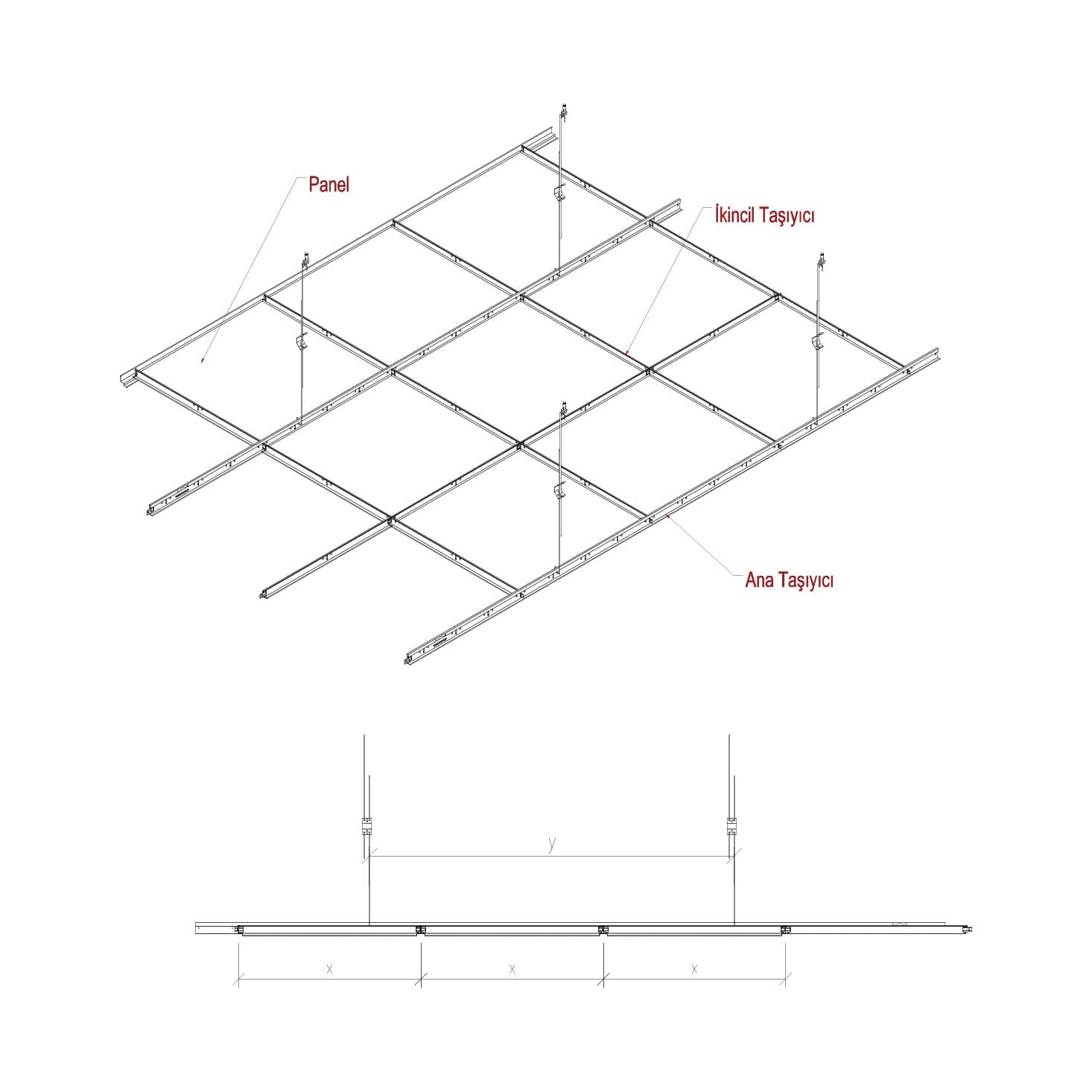
Carrier grid system
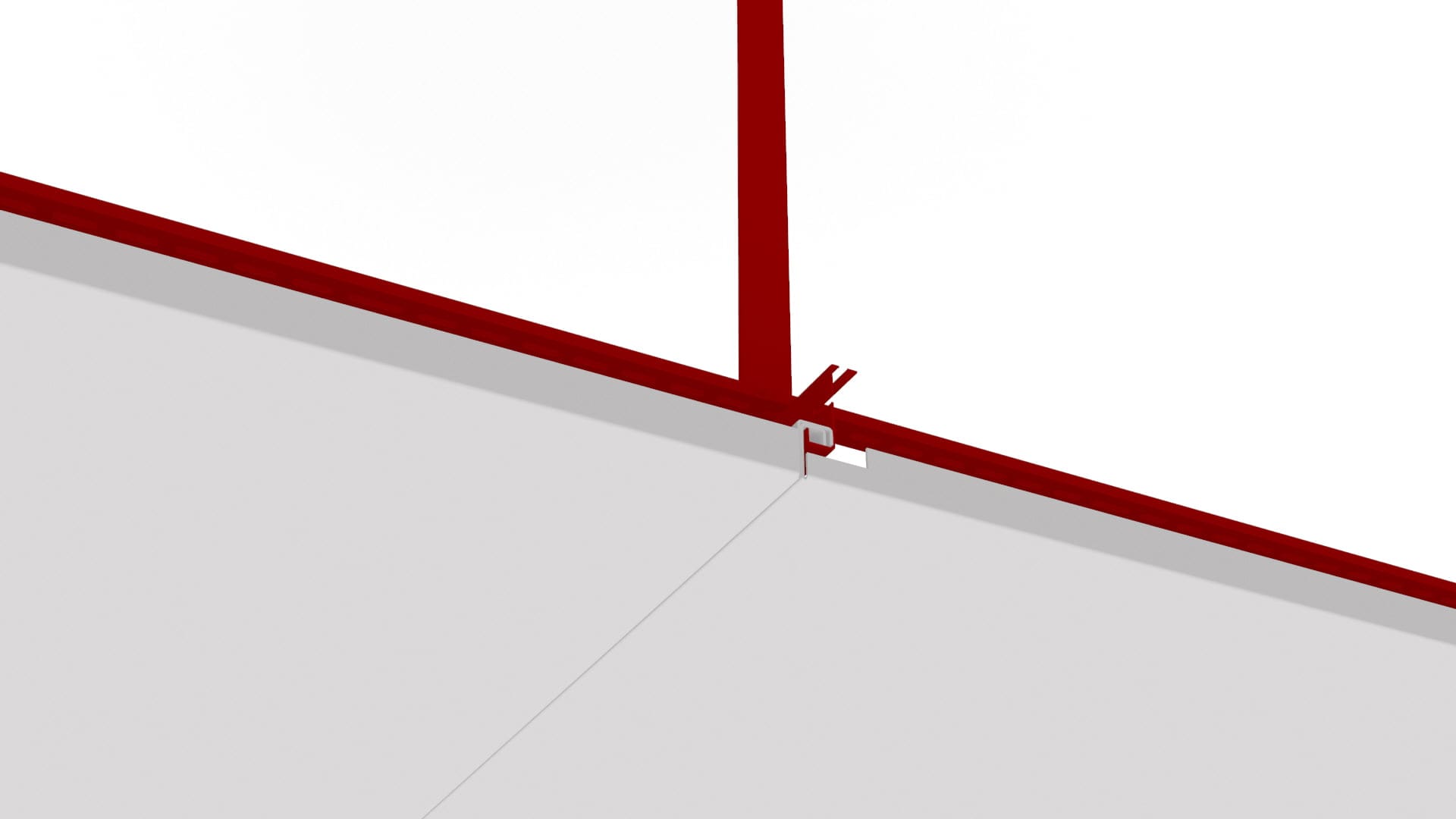
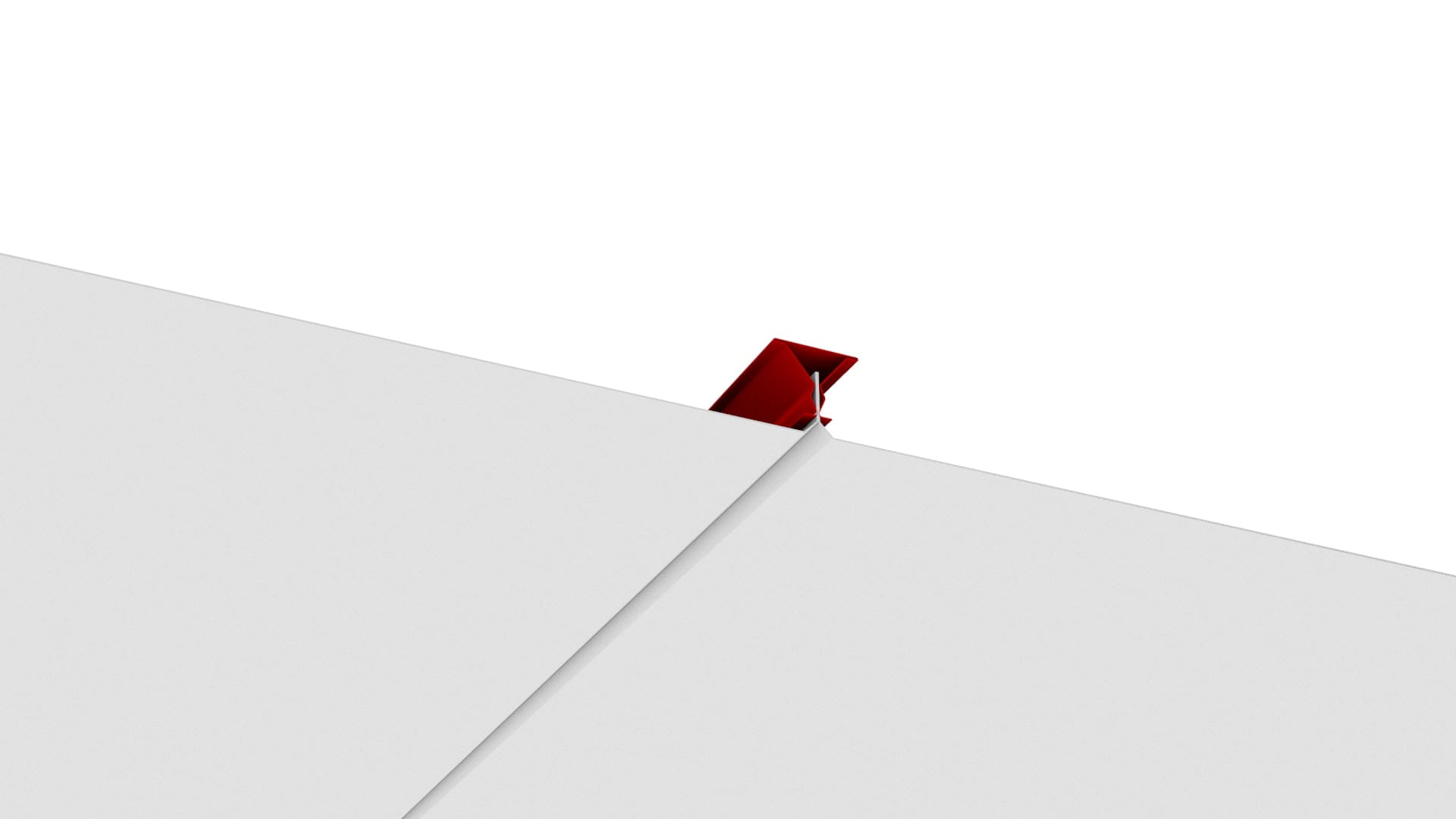
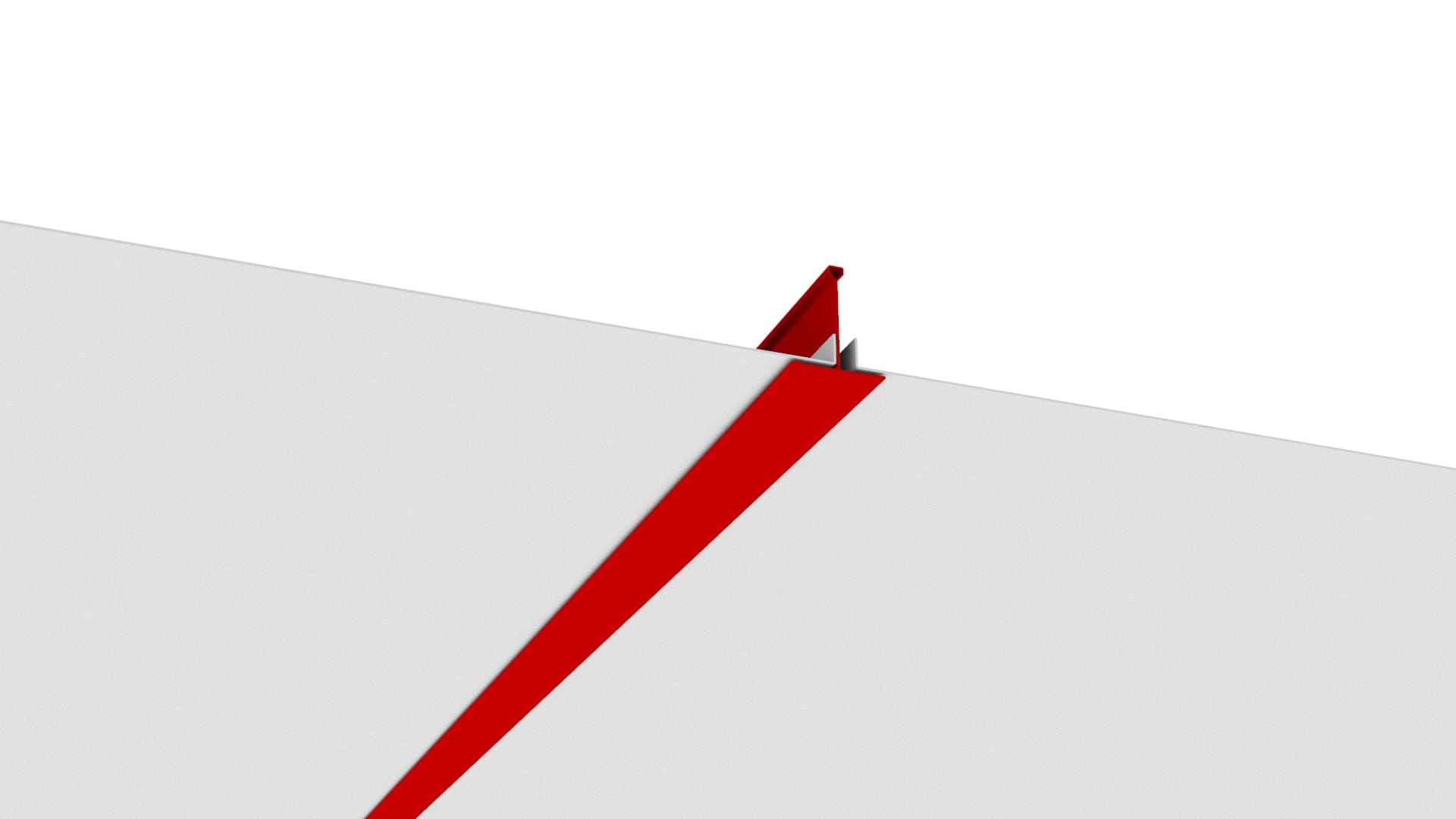
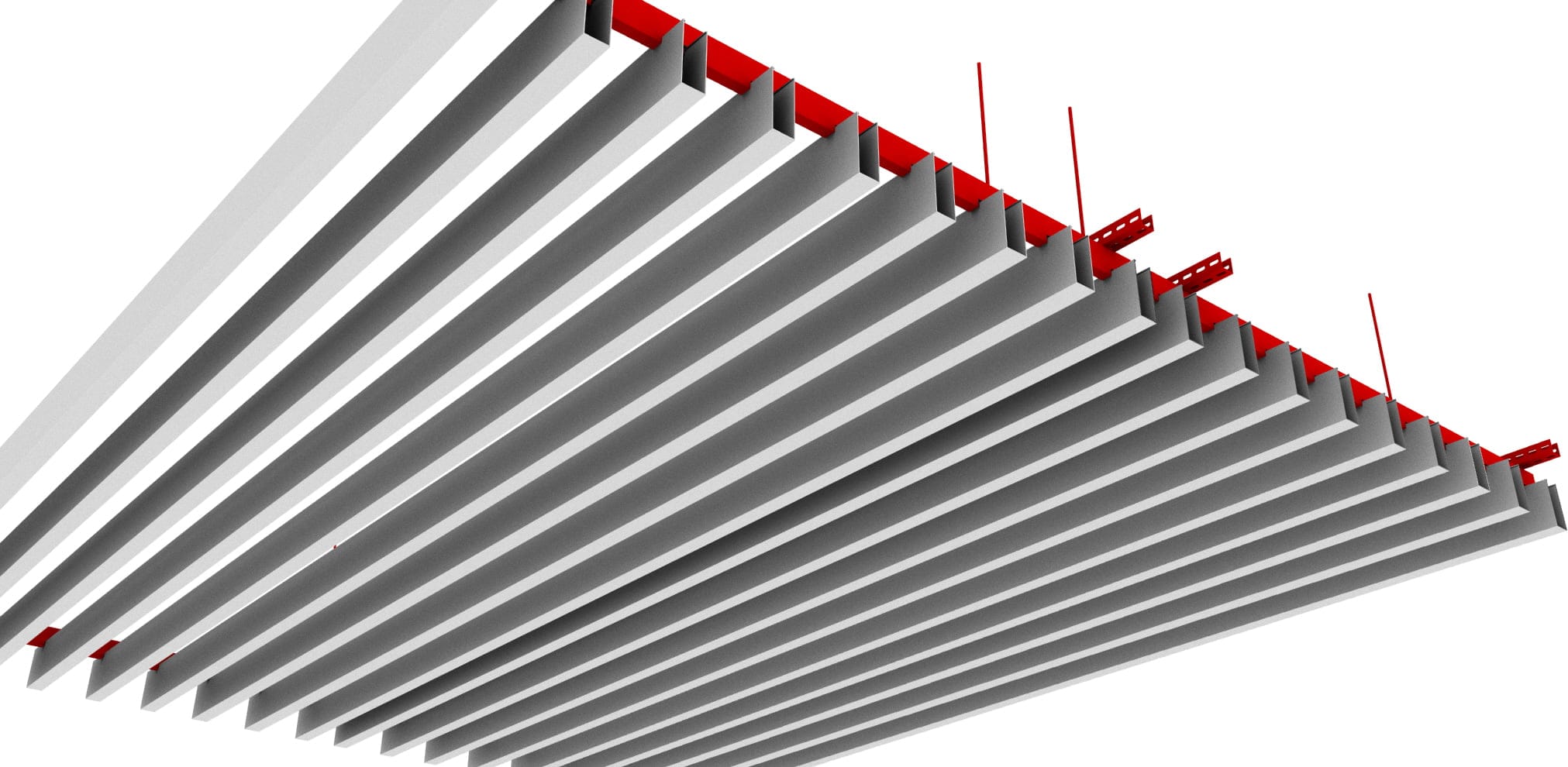
Main runners: The long profiles that form the main structure across the ceiling.
Cross tees: Connected at right angles to the main runners to form the framework that holds the panels.
Wall angles: Used at the wall edges to fix the grid system to the wall.
Ceiling panels
Materials: Metal (aluminium or steel), mineral fibre, plasterboard or PVC.
Sizes: Usually produced in standard 600×600 mm or 600×1200 mm modules.
Surface finishes: Flat, perforated, patterned or painted.
Advantages
- Easy installation & removal — panels fit into and lift out of the grid easily for maintenance and access.
- Aesthetic variety — a wide range of materials, colours and patterns.
- Acoustic performance — acoustic panels provide sound insulation.
- Fire resistance — fire-resistant materials raise fire safety.
- Lighting & ventilation compatible — designs work with light fixtures and ventilation grilles.
- Lightweight construction — light panels and carriers ease the load on the building.
Where it is used
- Offices
- Commercial buildings
- Hospitals
- Schools
- Hotels
Installation
- Preparation — the existing ceiling surface is cleaned and measured.
- Wall angles — fitted to the wall edges.
- Main runners — installed to suit the ceiling height.
- Cross tees — connected at right angles to form the framework.
- Placing the panels — panels are set into the framework.
Thanks to their flexible, functional construction, lay-in ceilings can be applied in many different spaces. With the right material and design choices, aesthetics and functionality go hand in hand.